
A comprehensive guide explaining the science, safety, and life-changing benefits of advanced vision correction.
Living with a refractive error means starting every single day searching for your glasses or dealing with contact lenses.
Whether you struggle with nearsightedness, farsightedness, or astigmatism, these common optical issues can severely limit your daily freedom.
Fortunately, technological breakthroughs in ophthalmology have made permanent visual correction safer and more accessible than ever before.
If you are ready to leave your visual aids behind, finding the Best Laser Eye Surgery in Lahore is your most crucial first step.
At VisionPro, we are immensely proud to offer the most advanced, minimally invasive refractive solutions available globally.
By combining state-of-the-art medical technology with highly experienced surgeons, we consistently deliver the Best Laser Eye Surgery in Lahore to our patients.
Refractive errors occur when the shape of your eye prevents light from focusing correctly on your retina.
This structural mismatch leads to blurry vision, which can cause chronic headaches, eye strain, and significant daily frustration.
For decades, individuals relied exclusively on corrective lenses, which merely treat the symptoms without addressing the root cause.
Today, the Best Laser Eye Surgery in Lahore offers a permanent structural correction by gently reshaping the cornea.
This precise reshaping allows light to focus perfectly on the retina, restoring your natural ability to see clearly without any artificial aids.
An exceptional surgical outcome relies entirely on an exhaustively detailed pre-operative assessment.
You cannot receive the Best Laser Eye Surgery in Lahore without undergoing rigorous 3D corneal mapping and wavefront analysis.
At our premier facility, we use high-definition optical coherence tomography to measure the exact thickness and curvature of your corneas.
These exhaustive tests ensure that we adhere to the strict clinical guidelines established by the American Academy of Ophthalmology.
By generating a microscopic blueprint of your eyes, our expert surgeons can customize a laser profile tailored uniquely to your anatomy.
Opting for refractive surgery is one of the most rewarding investments you can make in your personal health and lifestyle.
Patients who experience the Best Laser Eye Surgery in Lahore regularly report a massive increase in their overall quality of life.
Here are ten undeniable reasons why taking this step will completely transform your daily routine:
1. Immediate Visual Clarity: Unlike older surgical methods, modern laser procedures offer remarkably fast results, with most patients seeing clearly within 24 hours.
2. Painless Experience: We utilize advanced anesthetic eye drops to ensure that your procedure is entirely comfortable and completely pain-free.
3. Unhindered Active Lifestyle: Enjoy swimming, running, and playing sports without the constant fear of losing a contact lens or breaking your glasses.
4. Enhanced Career Opportunities: Certain professions, such as military service or aviation, demand perfect uncorrected vision, which this surgery can provide.
5. Long-Term Financial Savings: Calculate the lifetime cost of designer frames, prescription lenses, and daily cleaning solutions; a one-time surgery is highly cost-effective.
6. Unmatched Precision: The lasers we use operate at femtosecond speeds, offering microscopic accuracy that human hands simply cannot replicate.
7. No More Allergy Irritation: Contact lens wearers often suffer from severe discomfort during allergy season, an issue completely eliminated by laser vision correction.
8. Superior Night Vision: Advanced wavefront technology significantly reduces issues like halos and glare, vastly improving your ability to drive safely at night.
9. Increased Self-Confidence: Many individuals feel self-conscious about thick prescription glasses; achieving natural visual freedom often provides a massive boost to personal self-esteem.
10. Lasting Results: The corneal reshaping achieved through the Best Laser Eye Surgery in Lahore is a permanent, lifetime alteration.
If you want the most advanced, minimally invasive refractive technology available today, SMILE Pro is your ultimate answer.
SMILE Pro represents the highest standard of care, making it the most requested option for the Best Laser Eye Surgery in Lahore.
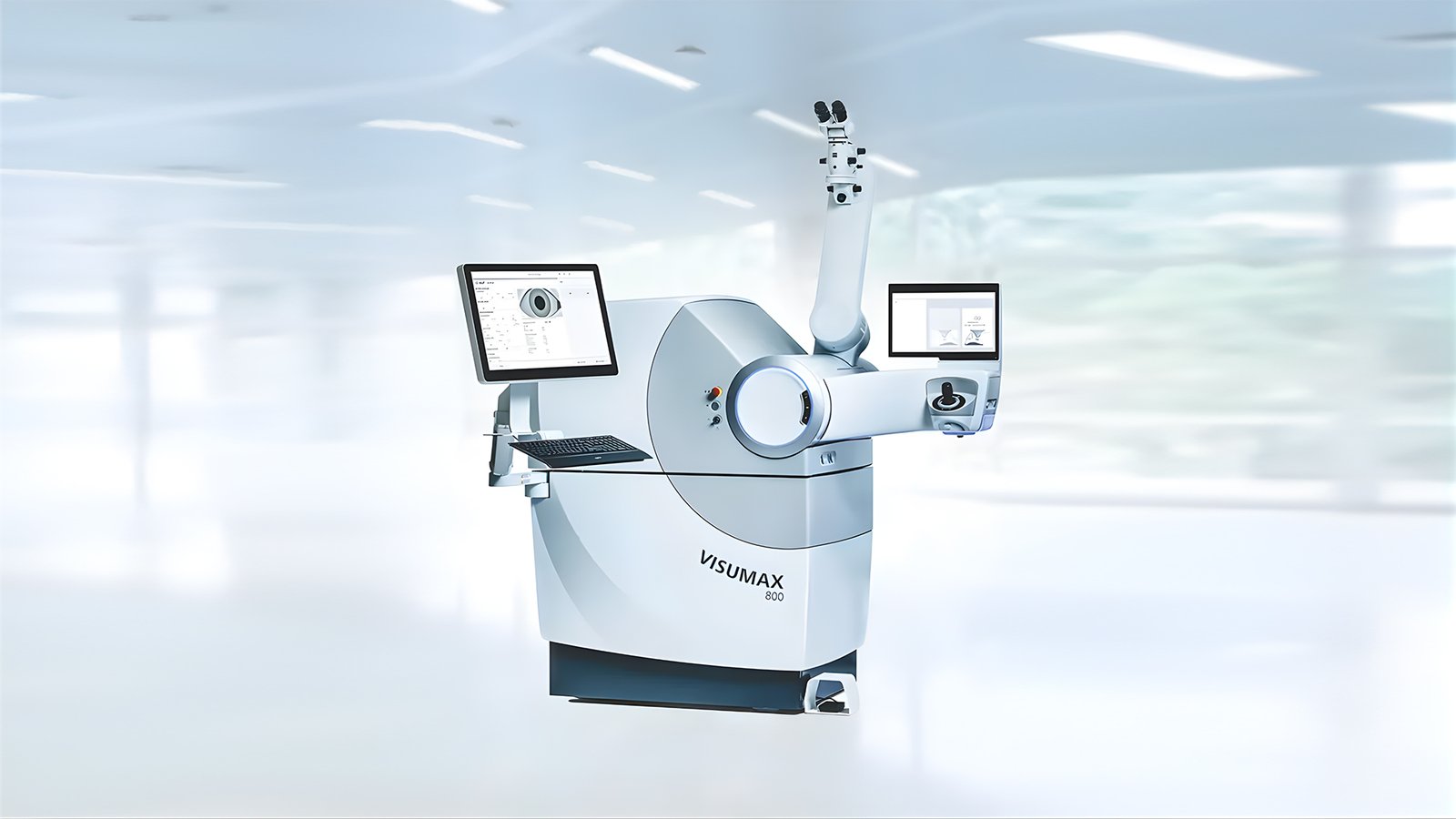
This revolutionary, flapless procedure is powered by the extraordinary ZEISS VISUMAX 800 femtosecond laser.
Instead of creating a large circular flap on the surface of the eye, the surgeon uses the laser to carve a microscopic lenticule inside the cornea.
This tiny piece of tissue is then gently extracted through a minuscule 2mm keyhole incision.
Because the incision is so small, the biomechanical strength of your eye is heavily preserved, and the risk of severe dry eyes is dramatically reduced.
Incredibly, the laser firing process for SMILE Pro takes only about 9 seconds per eye.
While SMILE Pro is the newest revolution, FemtoLASIK remains a proven, gold-standard treatment for millions of people worldwide.
As a leading provider of the Best Laser Eye Surgery in Lahore, we perform this procedure using a 100% bladeless technique.
A highly precise femtosecond laser creates a thin, uniform corneal flap, completely eliminating the mechanical blades used in older LASIK surgeries.
An excimer laser then applies cool ultraviolet light to reshape the underlying corneal tissue smoothly.
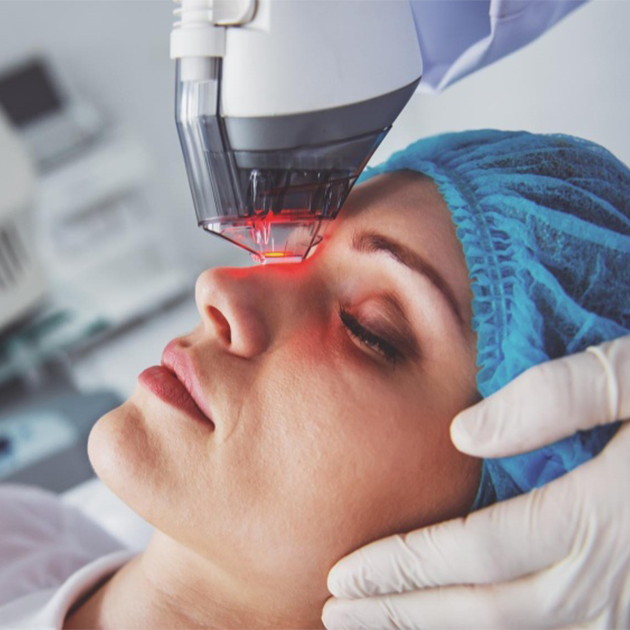
Once the reshaping is complete, the flap is carefully folded back into place, acting as a natural bandage that requires no stitches.
FemtoLASIK is exceptionally effective for correcting complex refractive errors, particularly severe astigmatism and hyperopia.
World-class technology means very little without an equally rigorous approach to clinical hygiene and patient safety.
When you choose the Best Laser Eye Surgery in Lahore, you are opting for a sterile, zero-infection surgical environment.
Our modern operating theaters are equipped with sophisticated HEPA filtration systems that constantly purify the surgical air.
Furthermore, we strictly adhere to the infection control guidelines published by the World Health Organization (WHO).
Our surgeons operate under a strict code of medical ethics; we simply will not perform surgery on an unsuitable candidate.
If you have severely thin corneas or an underlying condition like keratoconus, we will transparently advise you of the risks and suggest alternative treatments.
Many patients experience mild anxiety before their procedure, which is perfectly normal and easily managed.
We believe that patient education is the most effective way to eliminate fear and build total clinical trust.
On the day you undergo the Best Laser Eye Surgery in Lahore, you will first be given specialized anesthetic drops to completely numb your eyes.
You will remain awake during the brief procedure, resting comfortably under the laser while the surgeon talks you through every step.
The actual laser application takes only seconds, and you will feel nothing more than a slight sensation of pressure.
After the procedure, our dedicated staff will review your post-operative instructions and provide you with a customized recovery kit.
Your journey to perfect vision does not end when you leave our state-of-the-art surgical suite.
The Best Laser Eye Surgery in Lahore includes comprehensive, long-term post-operative monitoring to ensure a flawless recovery.
You will be instructed to use specific medicated eye drops to prevent infection and keep your eyes comfortably lubricated.
Most patients experience brilliant, functional vision within 24 hours and can quickly return to their computers and daily routines.
We schedule mandatory follow-up appointments to track your healing progress and answer any lingering questions you might have.
Q: Why is VisionPro known for providing the Best Laser Eye Surgery in Lahore?
A: We combine elite ZEISS laser technology, board-certified surgeons, and an uncompromising commitment to patient safety.
This holistic approach to medical excellence is why we are trusted to perform the Best Laser Eye Surgery in Lahore.
Q: Am I too old to get the Best Laser Eye Surgery in Lahore?
A: There is no strict upper age limit for refractive surgery, provided your eyes are generally healthy.
However, patients over 40 may also need treatments for presbyopia (aging eyes) or early-stage cataracts, which we can expertly manage.
Q: Will my vision regress after the Best Laser Eye Surgery in Lahore?
A: The corneal reshaping performed during the surgery is a permanent, structural change.
While natural age-related changes (like presbyopia) will eventually occur, the original refractive error rarely returns to any significant degree.
Q: Is the Best Laser Eye Surgery in Lahore covered by medical insurance?
A: Because it is generally considered an elective procedure, many standard insurance plans do not cover the full cost.
However, we offer transparent pricing and can provide all necessary documentation if your specific corporate policy offers partial coverage.
Do not let blurry vision hold you back from living an active, confident, and fulfilling lifestyle.
Imagine the incredible freedom of waking up every morning and seeing the world perfectly, completely unaided.
By choosing the most advanced clinical facility in the region, you are guaranteeing a safe, precise, and life-changing optical transformation.
Trust your irreplaceable eyesight to the experts who have dedicated their careers to mastering refractive perfection.
Take the definitive step toward permanent visual freedom by deciding to book your diagnostic consultation right now.
Experience the life-altering difference for yourself and receive the undisputed Best Laser Eye Surgery in Lahore at VisionPro.