
A complete guide to navigating advanced refractive surgery, comprehensive diagnostics, and medical treatments for optimal eye health.
Finding the best eye treatment center in Lahore is an incredibly important decision when you need significantly more than a routine vision check. Modern ophthalmology now offers highly advanced, technology-driven options for correcting refractive errors, managing cataracts, treating progressive glaucoma, stabilizing retinal diseases, and managing severe corneal conditions. However, the exact right treatment ultimately depends heavily on your precise diagnosis, overall eye health, age, lifestyle, and individual medical needs.
For patients actively searching for the best eye treatment center in Lahore, it is absolutely essential to look far beyond simple advertisements. You must heavily consider a clinic's specialist expertise, modern diagnostic facilities, diverse treatment options, surgical technology, strict patient safety protocols, and comprehensive follow-up care. A clinic is only as good as the precise diagnostics and the experienced surgeons driving the technology.
VisionPro Eye Care Centre successfully provides a wide range of premium ophthalmic services, including the highly advanced SMILE Pro, Femto LASIK, Trans-PRK/PRK, micro-incision cataract surgery, premium intraocular lenses (IOLs), surgical retina care, diabetic eye disease treatment, therapeutic corneal cross-linking, and specialized ICL treatment.
This comprehensive clinical guide explains these major treatment options, detailing who may greatly benefit from them, exactly what patients can expect before and after surgery, potential limitations and clinical risks, recovery considerations, and precisely how to choose an appropriate clinical facility for your unique ocular profile.
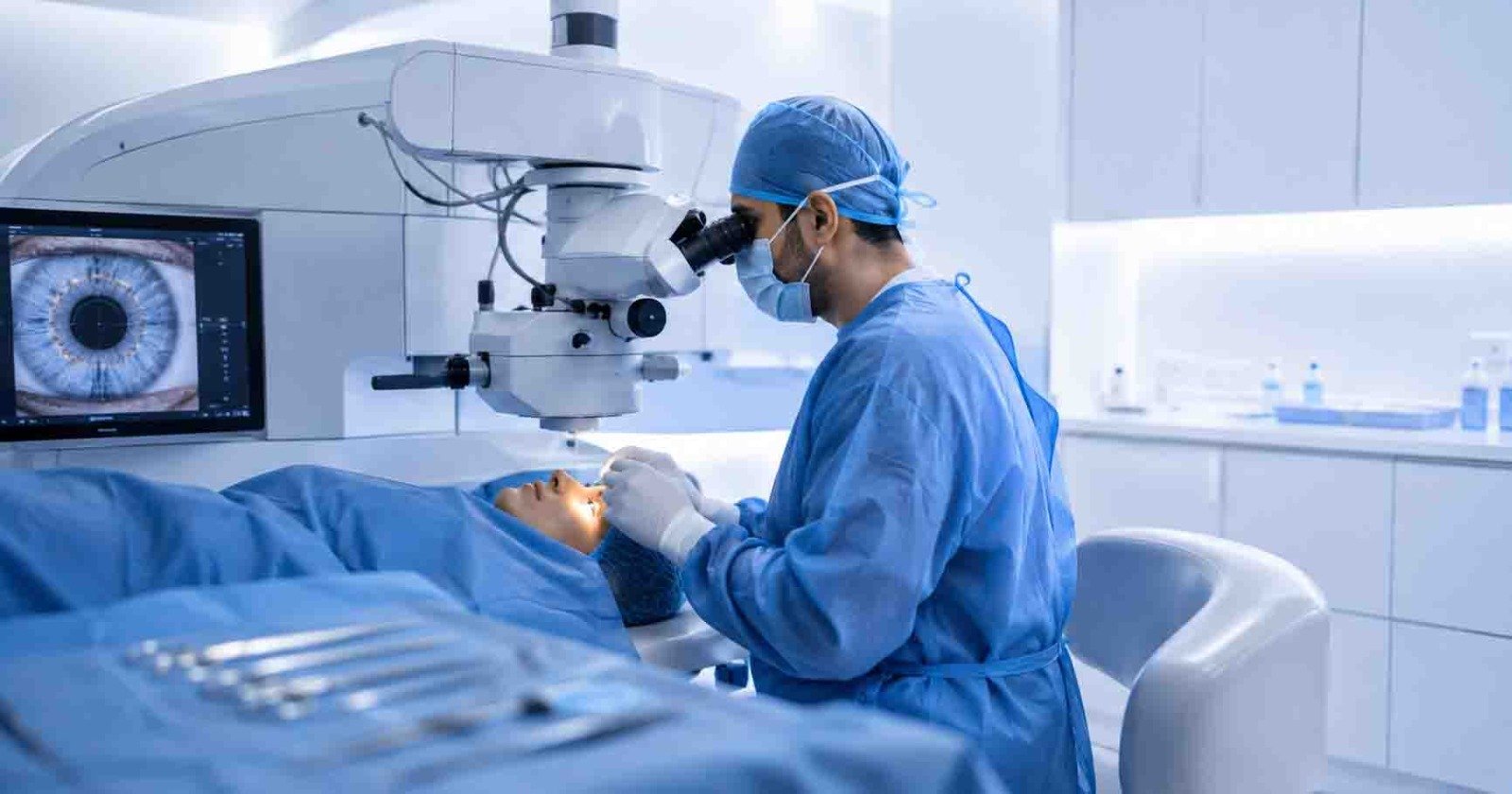
The best eye treatment center in Lahore should provide an incredibly comprehensive medical evaluation before ever recommending any specific treatment. A highly sophisticated laser or an expensive surgical system alone does not automatically determine whether a particular clinic is medically appropriate for a unique patient.
A highly detailed, microscopic examination is particularly important before any refractive surgery is undertaken. Modern preoperative assessment must include rigorous testing of visual acuity, exact digital refraction, high-resolution corneal topography or tomography, precise pachymetry (to measure corneal thickness), comprehensive tear-film assessment, accurate tonometry (eye-pressure measurement), and a dilated evaluation of the overall internal health of the eye.
Patients should therefore always select the best eye treatment center in Lahore according to the specific demands of their condition and the thoroughness of the diagnostic phase, rather than simply choosing the clinic with the most prominent marketing claims. Superior diagnostic accuracy is the true foundation of safe, predictable ophthalmology.
SMILE Pro represents the absolute cutting-edge of modern laser vision correction. It is an incredibly advanced procedure that exclusively uses a highly precise femtosecond laser to create and carefully remove a tiny, contact-lens-shaped lenticule of corneal tissue through an extraordinarily small incision. Unlike traditional LASIK, it definitively does not require the creation of a conventional, large corneal flap.
VisionPro proudly lists SMILE Pro among its most advanced vision-correction services, providing a seamless experience for those looking to safely eliminate their daily dependence on glasses.
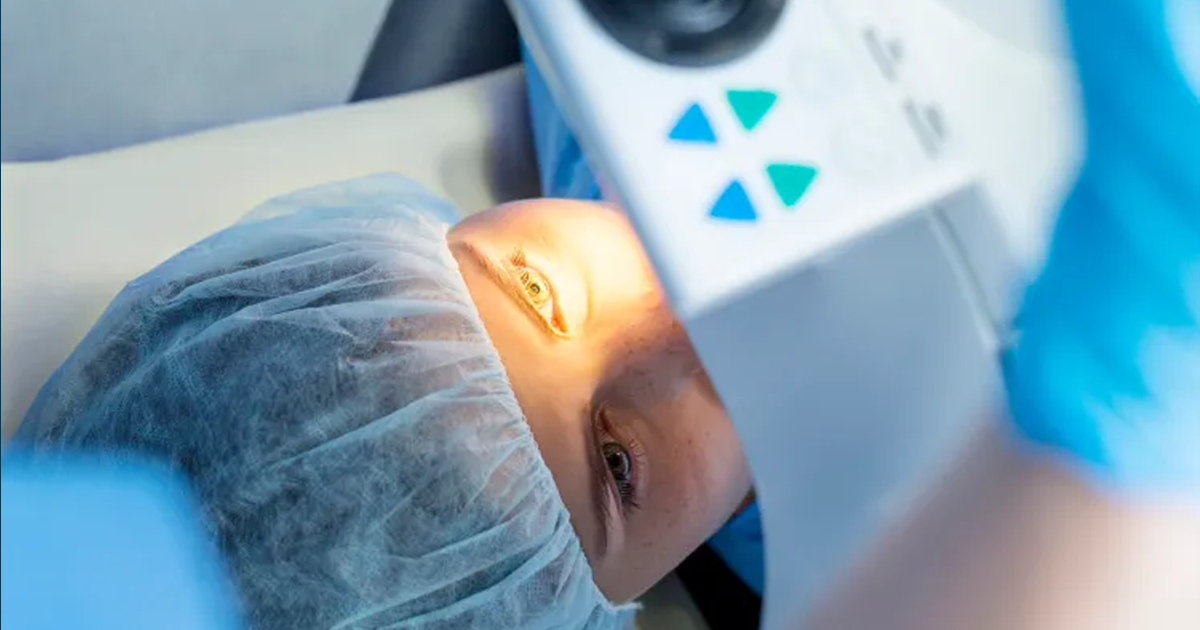
Clinical suitability for this premium procedure depends on several strict medical factors, including:
It is crucial to understand that not every person who deeply wants freedom from glasses is automatically a safe candidate. A highly detailed examination by a qualified eye specialist in Lahore is strictly necessary before deciding whether SMILE Pro is clinically appropriate.
The completely flapless approach can be extremely attractive to patients who actively participate in contact sports or those who want a minimally invasive refractive procedure with a significantly reduced risk of postoperative dry eye syndrome. However, SMILE Pro is not automatically better than every other laser procedure for every single patient. Certain specific prescriptions or corneal profiles are still better treated with other modalities.
Potential side effects of any refractive surgery can include temporary dryness, fluctuating vision during the initial healing phase, mild glare, halos around lights at night, slight undercorrection, or overcorrection. Individual physiological outcomes will naturally vary based on healing responses.
Femto LASIK is another globally renowned, highly effective form of laser vision correction. In this two-step bladeless procedure, a precise femtosecond laser is first utilized to create a thin, hinged corneal flap. Afterward, a sophisticated excimer laser is used to smoothly and precisely reshape the underlying stromal corneal tissue, correcting the eye's focal point.
It may be strongly considered for highly suitable patients struggling with myopia, hyperopia (farsightedness), or astigmatism. For more detailed clinical guidelines on exactly how LASIK works and who is eligible, patients can consult the comprehensive resources provided by the American Academy of Ophthalmology.
A proper, dilated medical assessment should determine whether the patient's cornea and overall internal eye health are genuinely appropriate for surgery. Medical factors such as a highly unstable prescription, significant dry eye syndrome, hidden corneal abnormalities (like early keratoconus), certain systemic or eye diseases, pregnancy-related refractive changes, and unrealistic expectations may entirely disqualify a patient from undergoing surgery safely.
Many patients happily experience a relatively quick functional visual recovery shortly after Femto LASIK, often noticing vast improvements within 24 hours. However, complete physical recovery is not perfectly identical for everyone. Patients may commonly experience temporary irritation, mild dryness, slightly blurred or fluctuating vision, glare, or halos in the first few weeks.
Strict postoperative instructions will include using prescribed antibiotic and lubricating eye drops, carefully avoiding eye rubbing, protecting the healing eyes while sleeping with provided shields, and faithfully attending scheduled follow-up examinations to ensure proper epithelial healing.
PRK (Photorefractive Keratectomy) is a highly proven, surface-based laser vision correction procedure. Instead of creating a deep LASIK flap, the microscopic surface epithelium is carefully removed and an excimer laser directly reshapes the underlying cornea.
Trans-PRK is a highly advanced, completely touchless surface-ablation approach. In this technique, precise laser treatment is used to seamlessly remove the epithelial layer before executing the corneal reshaping, minimizing the need for surgical instruments and alcohol solutions.
PRK or Trans-PRK may be heavily considered for some patients who are not suitable candidates for flap-based procedures due to having thin corneas, irregular topography, or occupational hazards (like military duty or martial arts). However, exact candidacy depends entirely on detailed clinical assessment.
PRK is generally performed comfortably using anesthetic numbing eye drops. After the cornea is successfully reshaped by the excimer laser, a soft, therapeutic bandage contact lens is securely placed on the eye to protect it while the surface epithelium regenerates underneath.
The early recovery period (the first 3 to 5 days) can involve notable discomfort, heavy tearing, significant light sensitivity, and heavily blurred vision. The epithelial layer generally regrows over several days, while refined visual recovery continues over a much longer period compared to LASIK. Patients must meticulously follow their surgeon's instructions and avoid exposing the healing eye to unnecessary dust or irritation.
Cataracts naturally occur when the clear natural lens inside the human eye becomes heavily cloudy due to aging, trauma, or disease, gradually but significantly affecting vision. Symptoms may include continuously blurred vision, heavy glare from oncoming headlights, difficulty seeing clearly at night, faded or yellowish colors, and frequent, frustrating prescription changes.
Modern cataract surgery (phacoemulsification) involves gently breaking up and removing the cloudy natural lens through a micro-incision and permanently replacing it with a clear, highly advanced artificial intraocular lens, commonly known as an IOL.
Cataract surgery is generally heavily considered when the developing cataract causes visual symptoms that actively interfere with daily activities, driving, reading, or overall quality of life. The clinical decision should be based solidly on a thorough ophthalmic assessment rather than the patient's age alone.
The specific choice of IOL (monofocal, toric for astigmatism, or multifocal for near and far vision) depends on factors such as ocular health, strict visual requirements, precise biometric measurements of the eye, daily lifestyle, and the patient's ultimate expectations. To evaluate your surgical options, consult with a qualified eye specialist in Lahore.
The retina is an incredibly delicate, light-sensitive layer of tissue located at the very back of the eye that plays a highly critical role in processing vision. Severe retinal disorders can include diabetic retinopathy, sudden retinal tears, traumatic retinal detachment, age-related macular disorders, and other sight-threatening conditions.
People living with diabetes must take comprehensive retinal screening incredibly seriously because diabetic eye disease (diabetic retinopathy) can rapidly develop and cause irreversible damage long before any significant visual symptoms actually appear to the patient.
Treatment heavily depends on the specific diagnosis and may include lifelong monitoring, medication, intravitreal injections, precise laser therapy to seal leaking blood vessels, or highly complex vitreoretinal surgery in severe cases.
Experiencing sudden flashes of light, a sudden, massive increase in dark floaters, a dark curtain or shadow falling across the vision, or sudden, painless vision loss can clearly indicate a potentially serious retinal detachment. This requires immediate, urgent medical evaluation to prevent permanent blindness.
Glaucoma is a terrifying group of progressive eye diseases that can silently damage the vital optic nerve, often due to high intraocular pressure, and may eventually cause permanent, irreversible vision loss. In a vast majority of cases, open-angle glaucoma can dangerously progress without any obvious symptoms during its early and intermediate stages.
A truly comprehensive glaucoma assessment at a premier clinic must include highly accurate eye-pressure measurement (applanation tonometry), microscopic optic-nerve evaluation, computerized visual-field testing, and OCT scans of the nerve fiber layer to detect microscopic thinning.
Lifelong treatment can involve daily prescription eye drops, in-office laser treatment (like Selective Laser Trabeculoplasty), complex filtration surgery, or a combination of approaches depending entirely on the specific type and severity of the glaucoma.
You should urgently consider seeing an eye specialist if you regularly experience:
VisionPro proudly provides highly comprehensive ophthalmic care ranging from deep diagnostic evaluation to incredibly advanced surgical treatment. Its extensively published services include SMILE Pro, Femto LASIK, Trans-PRK/PRK, bladeless cataract surgery, premium IOLs, surgical retina care, diabetic eye disease treatment, therapeutic corneal cross-linking, and specialized ICL treatment.
For patients heavily researching the best eye treatment center in Lahore, VisionPro can be confidently considered according to the specific surgical treatment or complex condition requiring medical assessment. The center operates at 109 C2, Block C 2 Gulberg III, Lahore, 54660, Pakistan, providing patients with immediate access to premium consultations and a wide range of modern ophthalmic services.
If you are ready to prioritize your vision and undergo a proper diagnostic workup, you can safely book your appointment to meet with a highly qualified specialist. The appropriate treatment should absolutely always be determined after a highly individualized examination, never before.
Choosing the best eye treatment center in Lahore is about significantly more than simply selecting a clinic that boasts about having advanced technology on social media. Patients should always actively look for highly qualified specialists, incredibly accurate diagnostics, appropriate and safe treatment options, totally transparent communication regarding risks, realistic outcome expectations, and reliable, long-term follow-up.
Whether you are deeply considering SMILE Pro, Femto LASIK, PRK, advanced cataract surgery, complex retina treatment, progressive glaucoma management, or another highly specialized form of eye care, the absolutely correct medical approach always begins with a comprehensive, dilated eye examination.
VisionPro Eye Care Centre proudly offers a vast range of modern ophthalmic services tailored for many different visual and eye-health needs. If you are searching for the best eye treatment center in Lahore, always prioritize evidence-based medical advice, appropriate specialist expertise, strict patient safety protocols, and long-term eye health over flashy promotional promises. The true goal of advanced eye care should never simply be better vision today, but the highly responsible medical management and permanent protection of your vision for the future.